Sapiens
《人類大歷史》
Humanity's strength comes from collective imagination.
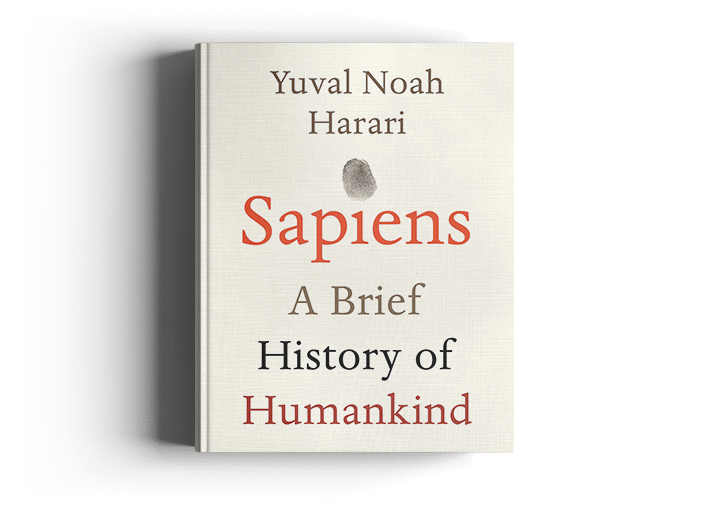
When I read Sapiens: A Brief History of Humankind, one idea stood out to me: humanity's strength comes from collective imagination.
Nations, companies, money, and laws don't exist in nature. They only work because we believe in them together. These shared beliefs allow strangers to cooperate on a large scale and move civilization forward.
Another surprising insight was about unintended consequences. The Agricultural Revolution looked like progress, but it actually made daily life harder. In the same way, software made data processing faster, but also created more tasks for us. Efficiency doesn't always mean happiness. History often works like a trade-off: every gain comes with a loss.
What amazed me even more is how little humans have changed. Seventy thousand years ago, Homo sapiens had the same brain capacity and emotional needs we have today. What changed were the systems around us - from tribal myths to national institutions, from stone tools to artificial intelligence. Our core desires stayed the same; only the things we believe in and depend on have shifted.
This made me think about AI and automation. They are not just tools, but also a new kind of collective imagination. Once people broadly trust AI to process information and support decisions, it becomes a system that shapes how resources are used and how collaboration happens.
The real value of AI is not just faster output, but in how we choose to apply it. When used in daily workflows, AI can automate repetitive tasks and free people to focus on higher-value work like analysis and creation. The main question isn't about AI itself, but whether we can design the right systems that turn it into a true driver of growth.
History is not only about the past - it's a mirror. By seeing how collective imagination and trade-offs shaped today, we can make better choices for tomorrow.
Leave a Comment
留言
Share your thoughts and join the discussion
分享您的想法並參與討論